
Keyword mapping
Keyword mapping lays the groundwork for a winning SEO strategy. You match every keyword to the right page and stop cannibalisation
 Kevin Boon · 6 April 2026 · Updated 6 October 2026 · 17 min read

Why keyword mapping is the foundation of every winning SEO strategy
Keyword mapping lays the groundwork for a winning SEO strategy. You match every keyword to the right page and stop cannibalisation before it starts.
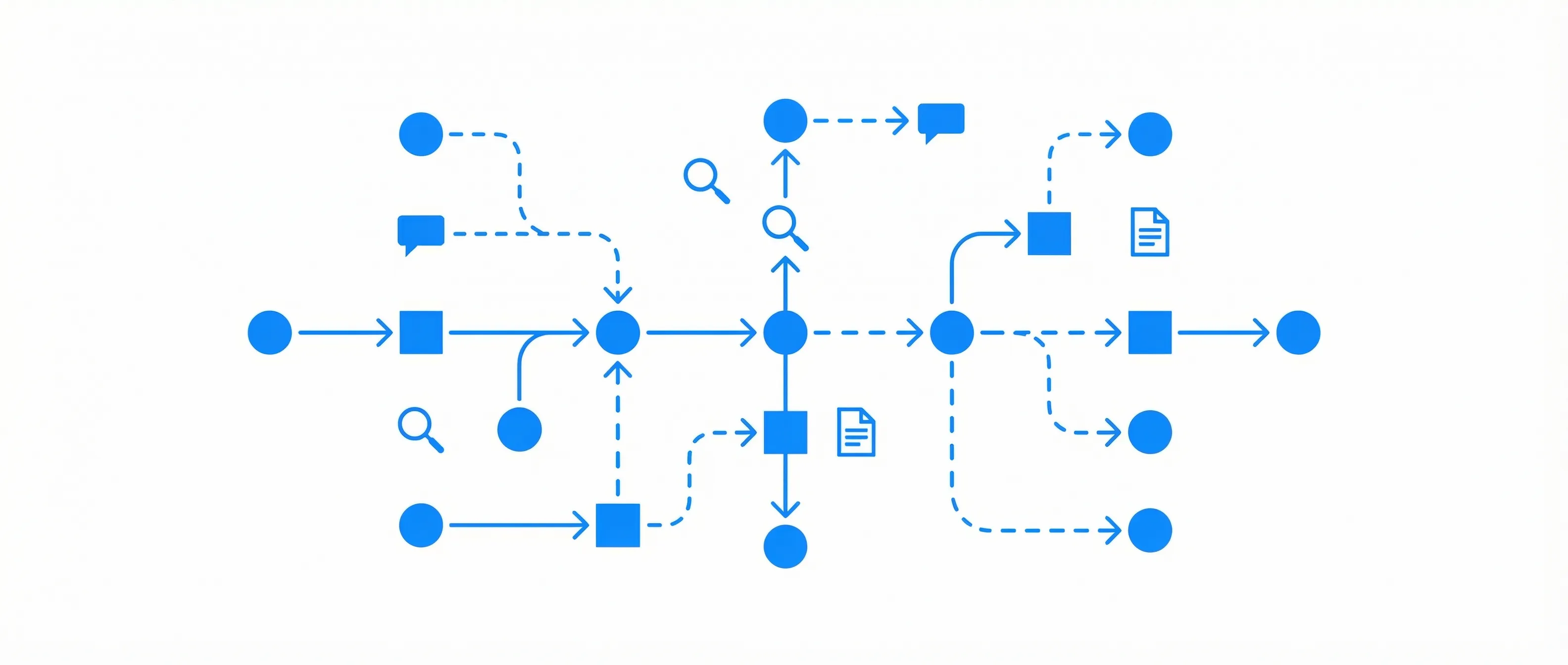
This structure works as the architectural drawing of your website. Without the map, you build content on shaky foundations and miss the connection with what your audience is actually searching for. It bridges the gap between raw keyword research and measurable results. By assigning keywords strategically, you help search engines understand the relevance of your content. It is a proven way to win higher positions in the search results.
It also stops keyword cannibalisation straight away. Without clear boundaries, several pages compete with each other for the same top positions, which slows down your organic growth. A tight map gives you a clear URL structure and becomes the backbone of your content planning. It also makes it easier to build a logical internal linking structure, for example when you work with a pillar-cluster model. With tools such as Google Search Console you then monitor whether the structure you chose is having the effect you wanted.
When you compare the traditional process with AI-driven automation, you see a considerable gain in efficiency. Grouping keywords by hand is error-prone and time-consuming. By using process automation and semantic matching, you get a turnaround that is 30 to 50 percent faster, depending on the quality of your data infrastructure.
| Mapping approach | Speed and turnaround | Accuracy and error reduction |
|---|---|---|
| Manual execution | Slow (fully manual analysis) | Low (high risk of human error) |
| AI-automated framework | 30 to 50 percent faster | High (error prevention through semantic matching) |
Want a flawless site structure straight away, without wasting time? Book a free intro call and see our data-driven approach.
Key takeaways for your structure
- Prevent internal competition: Assign each keyword to one specific page to rule out keyword cannibalisation.
- Increase relevance: Match search intent closely by strategically pairing content with the query.
- Create an overview: Use the map as your guide for URL structure, internal linking and long-term content planning.
What is keyword mapping and why is it the backbone of your website?
Keyword mapping is the strategic process of assigning specific keywords to individual pages on your website. You turn a raw list of search terms into a logical structure that fits your visitor's search intent. This keeps your content management from descending into chaos. Instead of publishing articles at random, you deliberately pair one primary keyword with one specific URL. You then add relevant secondary terms and long-tail variants. With this strategic placement you prevent keyword cannibalisation, where several pages compete with each other for the same top positions in the search results.
From loose keywords to a structured overview
An effective SEO strategy requires a shift from a flat list to a hierarchical model. You group keywords by stage of the customer journey, such as the research stage or the buying stage. The result is a pyramid-shaped site architecture. Broad short-tail terms get a place on the homepage or main categories, while you answer specific long-tail questions on product pages further down or in blog articles. This pillar-cluster model helps you build topical authority. The pillar pages cover the broad subjects and the cluster pages support them with in-depth subtopics. That gives you clear content planning and a strong internal linking structure that guides visitors effortlessly through your website.
The role of keyword mapping in technical SEO
Search engines need context to judge how relevant a page is. A well-thought-out keyword map helps crawlers understand the relationships between your pages straight away. When you combine logical keyword clustering with a clear URL structure, you improve the crawlability of your entire domain. Google then recognises faster which page is most relevant for a specific query. You use tools such as Google Search Console afterwards to check whether crawlers really interpret your website the way you intended. This technical optimisation makes your website not only more user-friendly but also future-proof.
Want to be sure your site structure is set up for maximum organic growth? Get in touch for a thorough analysis of your current architecture.
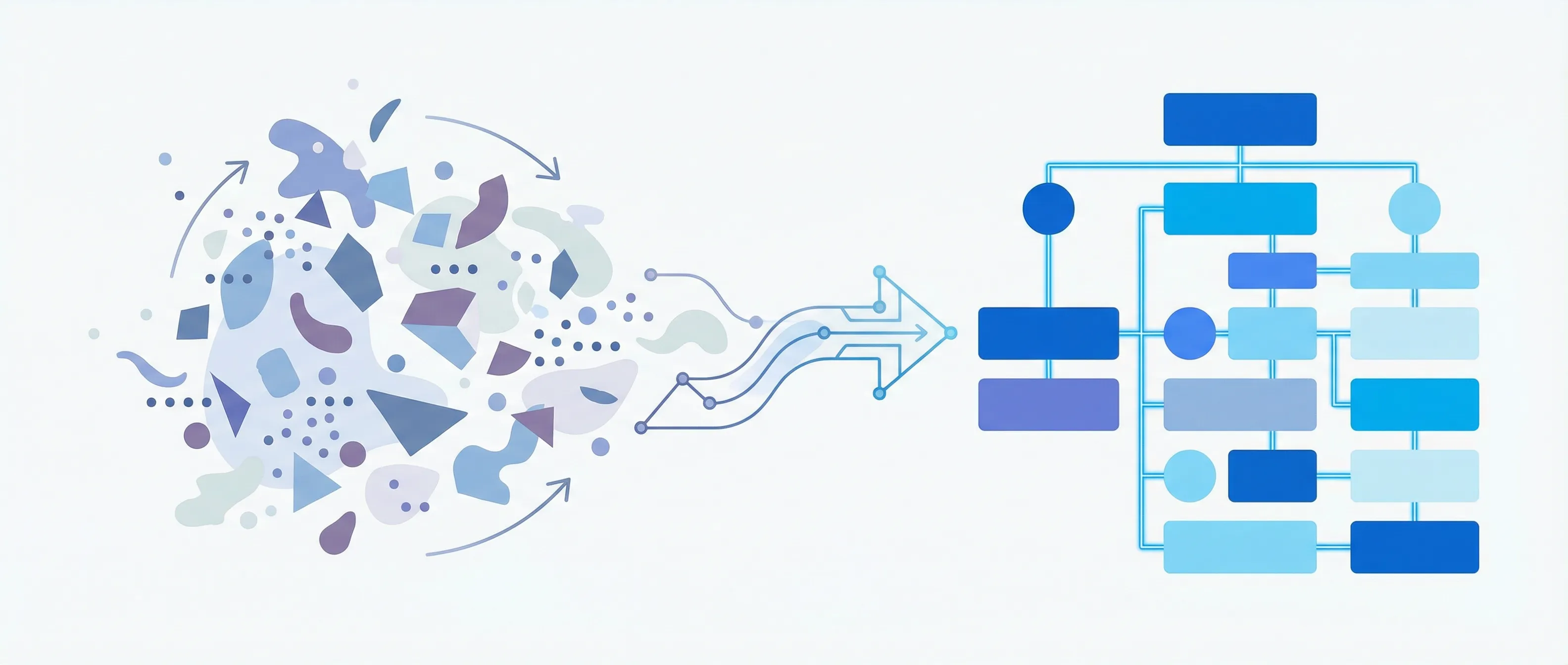
The inseparable link between search intent and keyword mapping
Search volume tells you how many people are searching, but search intent tells you what they actually want to find. High search volume is worthless if the visitor does not find what they are looking for on your page. Keyword mapping is all about matching queries to the right stage of the customer journey. Without that match, you risk content that is irrelevant to your audience. To map your keywords effectively, you split them into four main categories of intent:
- Informational: The visitor is looking for answers or explanations, recognisable by signal words such as “what is” or “how does”.
- Commercial: The visitor compares options and reads reviews before making a final choice.
- Transactional: The visitor is ready to make a purchase or buy a service.
- Navigational: The visitor is looking for a specific brand name or website.
Informational versus commercial search intent
The difference between these intents becomes clear with a concrete example. Say someone searches for “how do I choose a laptop”. This person has an informational need and is at the start of the customer journey. A clear blog post with buying tips fits perfectly here. If the same person searches for “buy laptop model X” a week later, the intent has shifted to transactional. If you accidentally map that transactional term to your informational blog post, you miss the mark. Google will not show a page as a relevant result when the content differs from what the user expects. You spot the right intent by analysing the current search results for signal words and the type of page that dominates.
The impact of intent on your conversion rate
The wrong keyword mapping has a direct effect on your website statistics. When a visitor with clear buying intent lands on a long, theoretical page, they leave quickly. The result is a high bounce rate. Google sees this as a signal that your page does not help the visitor, which leads to lower positions in the search results. By putting search intent at the centre of your SEO strategy, you avoid this mismatch. You not only attract more relevant traffic but also prevent keyword cannibalisation, where your own pages compete with each other. A correctly mapped structure guides the visitor smoothly from research to purchase.
Want to know how to match your keywords perfectly to the customer journey and increase your conversions? Get in touch with Rankpilot for a strategic analysis of your website.
How a keyword map puts an end to keyword cannibalisation for good
Keyword cannibalisation happens when several pages on your website compete for exactly the same search term. It confuses search engines such as Google. Instead of showing all the duplicate pages, the search engine picks one version. The other pages rank considerably lower or disappear from the search results altogether. Duplicate content hurts your rankings because the authority and valuable link equity you have built up gets spread across several URLs. By applying tight keyword mapping, you give every page its own unique main topic. That stops your own content from getting in its own way and gives you a clear URL structure.
Spotting internal competition
You spot internal competition quickly by checking in Google Search Console which URLs get impressions for the same query. When two or more pages keep swapping places in the search results, it is time to step in. Fewer pages get indexed effectively because crawl budget is wasted on duplicates. Solid content planning prevents this overlap. According to experts on preventing keyword cannibalisation, building an overview in a spreadsheet helps you see straight away where topics overlap. That way you distribute authority deliberately across relevant topics through a logical pillar-cluster model, instead of weakening your own SEO strength.
Strategies to fix cannibalisation
Once you have mapped the problem areas, you apply targeted fixes. Merge overlapping pages into one strong, authoritative source. This consolidates their value and strengthens your overall SEO strategy. Use canonical tags to point to the preferred URL when duplicate content is unavoidable. Target specific long-tail keywords with secondary pages to avoid direct competition with your main pages. Also adjust your internal linking structure by linking strategically to the primary page with the right anchor texts.
| SEO factor | Without mapping (cannibalisation) | With keyword mapping |
|---|---|---|
| Authority | Spread across several weak URLs | Concentrated on one strong pillar page |
| Google indexing | Confusion and wasted crawl budget | Clear signals and efficient crawling |
| Rankings | Fluctuating positions due to internal battles | Stable top positions per unique search term |
| Internal links | Competing references without focus | Support the primary landing page |
Stop your own pages from competing with each other in the search results. Request your 5 free improvement points and see how we optimise your site structure. Get in touch with Rankpilot straight away for a clear plan of action.
Five steps to a watertight keyword map for your business
A solid SEO strategy stands or falls with a clear blueprint for your website. By making data-driven choices, you build a scalable structure that grows with your business. This process turns a messy pile of data into a concrete action plan for your online visibility.
Ready for the next step?
Want to know what keyword mapping means in practice for your situation? rankpilot is happy to think along about the right approach, next steps and priorities.
Book a free intro callStep 1: Collect your most important keywords
Effective keyword mapping starts with thorough research. Use reliable sources such as Google Keyword Planner and export existing performance data straight from Google Search Console. These tools provide hard data on current search volumes and the level of competition. Create a clear spreadsheet with columns for the page title, the URL, the primary keyword and its search volume. During this inventory, do not focus only on the obvious head terms. Make sure you also include the specific long-tail variants your audience types in when they are further along in their decision process.
Step 2: Analyse the search intent per term
Every keyword represents a specific visitor need. You divide the terms you collected strictly by the search intent behind them. Is a potential customer looking for general information to solve a problem, or is there clear buying intent? By defining that intent sharply, you determine exactly which type of page is needed. An informational blog post answers an exploratory question, while a focused service page drives straight towards conversion. This precise matching is the core of successful content planning.
Step 3: Group keywords into logical clusters
Loose search terms lack context without the right architecture. Bundle related terms into clear keyword clusters around your main services or products. Work with the pillar-cluster model, where one broad main topic sits at the centre and specific subtopics support it in detail. Prioritisation is absolutely essential in this phase. Give priority straight away to the clusters with the highest business value and the best chance of a return for your organisation.
Step 4: Assign keywords to specific URLs
Link every selected focus keyword to one unique landing page on your website. The most important pillar pages get the broad search terms, while the detail pages below them focus on the specific nuances. This strict separation within your URL structure prevents keyword cannibalisation and makes sure search engines know exactly which page offers the most value. Record these assignments definitively in your documentation. This overview stops you from accidentally creating duplicate content in the future.
Step 5: Optimise your internal linking structure
The work does not stop once the keywords are assigned. The internal linking structure acts as the digital infrastructure of your website and connects all the elements of your keyword map. Link consistently from the supporting cluster pages back to the central pillar page with descriptive anchor texts. A well-thought-out linking strategy distributes the authority you have built up effectively across your entire domain. That makes your SEO structure not only strong for your current content but also fully scalable for future expansion.

Practical tools and templates to speed up your keyword mapping process
Manual keyword mapping is time-consuming and error-prone on large websites. Structuring hundreds of search terms by hand simply takes too many hours. Fortunately, the right tools and templates speed this process up considerably. You choose between accessible spreadsheet solutions for direct control and advanced SEO software for far-reaching automation. Rankpilot uses smart scripts and AI to cluster large datasets by search intent and relevance in one go. This prevents keyword cannibalisation and immediately lays the groundwork for a scalable SEO strategy.
Working with Excel and Google Sheets templates
A well-structured spreadsheet is the absolute basis for keeping an overview. With Excel templates or Google Sheets you assign keywords directly to specific pages on your website. You build columns for the primary keyword, search volume, level of competition and the matching URL structure. The advantage of this approach is full control over your data. You can easily share an online sheet with copywriters or web developers. To keep your keyword map up to date, schedule a fixed monthly check. That way you spot straight away whether new search terms need their own page or fit within an existing pillar-cluster model. Free basic tools such as Google Keyword Planner provide the raw data you then import into these templates.
Advanced SEO software for automation
For larger projects, a manual spreadsheet soon falls short. Specialist SEO software takes over the heavy number crunching and automates data collection. Programs such as Semrush and Ahrefs not only generate thousands of related terms but also have built-in features to group keywords straight away. Semrush, for example, has a feature that generates a content template instantly based on the top ten competitors. That gives you insight into the required text length and semantically related terms. Automating with these tools saves hours of research and minimises human error when determining search intent. You export the clustered lists straight into your own overviews for further implementation in your content planning.
Setting up and maintaining a professional structure takes technical knowledge and the right software. Want Rankpilot to take your keyword mapping and SEO strategy off your hands? Book a free intro call and see how we improve your online visibility structurally.
From overview to action: integrating your keyword map into your content strategy
A finished keyword map is the direct foundation for your content calendar. You translate the static data from your spreadsheet into a dynamic schedule for your marketing team. By linking keywords strategically to specific pages, every new piece of text fits the right search intent. The overview shows straight away which topics have priority and where there are still untapped opportunities. You schedule new articles for your informational clusters and optimise existing landing pages for commercial terms. That way you build your SEO strategy in a structured way, without topics overlapping or unintentionally competing in the search results.
The link between your technical SEO architecture and the creative execution takes shape in the brief for your copywriters. You use the document to hand out focused copywriting assignments. The writer sees exactly which primary keyword is central, which secondary terms support it and what search intent the visitor has. This prevents keyword cannibalisation because every page gets its own clearly defined goal within your pillar-cluster model.
To make this translation flawless, use a fixed checklist for your content planning:
- Identify missing pages based on your keyword research.
- Assign every new topic to a specific URL structure.
- Determine the search intent per page to choose the right angle.
- Schedule the publication dates in your content calendar.
- Make sure there is a logical internal linking structure to your new articles.
Measuring success and adjusting your approach regularly is crucial for lasting results. A keyword map is not a one-off project but a living document. You check the performance of your published content every month in Google Search Console. If the expected positions do not materialise, you optimise the existing text or adjust the internal linking structure. By continuously updating the map with new search terms and shifting search intent, you always keep an up-to-date overview for your content planning.
Frequently asked questions about using keyword mapping in practice
When setting up an SEO strategy, many business owners run into practical questions about execution. Below we answer the most common questions about using keyword mapping effectively for your website.
Start building a strong foundation today with a professional keyword map
A successful website starts with a well-thought-out blueprint. With solid keyword mapping you turn a loose list of search terms into a structured SEO strategy. You match every query to the right search intent and assign it to one specific page. This prevents keyword cannibalisation, where your own pages compete with each other in the search results. With this systematic approach you lay the groundwork for a logical URL structure and a strong internal linking structure. Every page gets a clear purpose and contributes to the authority of your entire domain.
The ROI of a well-organised website is considerably higher than that of a site with randomly placed content. You build a clear pillar-cluster model in which main topics and subtopics reinforce each other. This clear architecture not only makes it easier for search engines to crawl your site but also gives you maximum control over your content planning. With Google Search Console you then monitor exactly which clusters perform and where you need to adjust. That way you work towards lasting SEO success in a data-driven, focused way.
Key takeaways
What to remember
The key points from this article, brought together in a visual overview.
Definition of keyword mapping as the process of assigning URLs
Why intent matters more than search volume
What is keyword cannibalisation and why is it harmful?
Setting up a watertight structure takes focus and expertise. Rankpilot is ready to act as your strategic partner in this growth. We help you translate complex data into a workable, clear structure that delivers results straight away. Together we build a foundation you can keep scaling on for years without losing the overview.
Contents
- Why keyword mapping is the foundation of every winning SEO strategy
- What is keyword mapping and why is it the backbone of your website?
- The inseparable link between search intent and keyword mapping
- How a keyword map puts an end to keyword cannibalisation for good
- Five steps to a watertight keyword map for your business
- Practical tools and templates to speed up your keyword mapping process
- From overview to action: integrating your keyword map into your content strategy
- Frequently asked questions about using keyword mapping in practice
- Start building a strong foundation today with a professional keyword map