
Topic clusters and content silos: how to structure your website for SEO
A strong content silo structure lifts your SEO authority straight away. Find out how a logical site structure wins you more organic traffic
 Kevin Boon · 2 April 2026 · Updated 6 October 2026 · 15 min read

What are topic clusters and content silos?
A topic cluster is a group of pages about one subject: a pillar page that covers the topic broadly, surrounded by articles that each dig into one sub-question, all connected by internal links. A content silo is the same idea, only stricter: the pages mainly link within their own theme and often sit beneath each other in the URL as well. Both give search engines structure and build topical authority. In this article you'll read how to set up that kind of structure, what the difference is and which mistakes to avoid. The keywords for each cluster come from your keyword research.
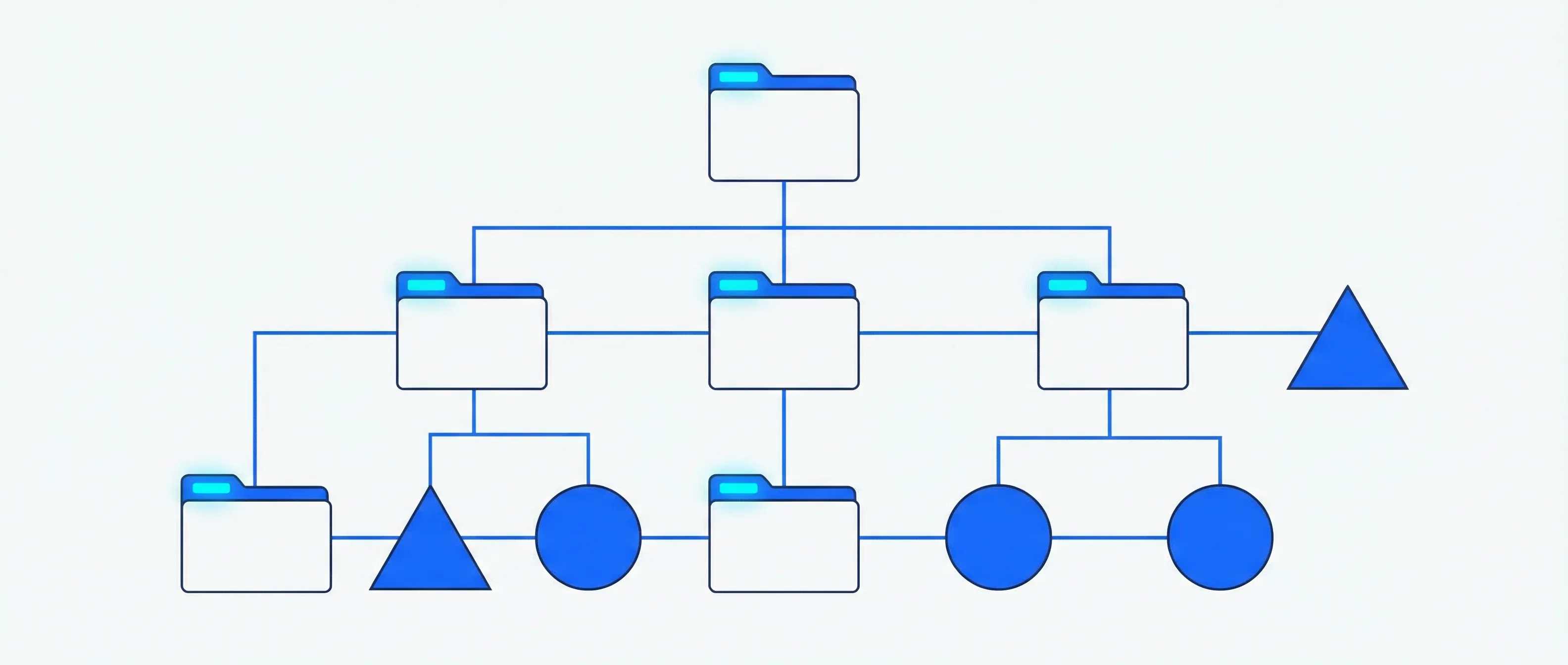
Search engines love order. When you publish articles at random without a clear hierarchy, crawlers get lost and your link equity gets scattered. The answer is to build a logical website structure. Think of a silo as a well-organised filing cabinet. You don't throw every document on one big pile. You use drawers for main topics and folders for subtopics. Online it works exactly the same way. You group related content around a central pillar page and connect it all with a tight internal linking structure.
This strategic layout has a direct impact on your rankings. Grouping related content improves your search engine rankings on several fronts:
- Thematic authority: You build focused topical authority because search engines recognise your expertise in a specific niche.
- Crawl efficiency: Search engine bots move through your website faster, which means new pages get indexed quickly.
- Link equity distribution: Backlinks to one article strengthen the whole cluster through smart link distribution.
At Rankpilot we see every day that a well-thought-out content architecture is the difference between stalling and growing in the search results. A standalone blog post rarely ranks for competitive terms on its own strength. By bundling your information strategically, you create a foundation that search engines and visitors understand straight away.
What exactly is a content silo structure?
A content silo structure is a hierarchical way of organising the information on your website. Instead of a flat list of loose articles, you build a layered ecosystem. The best comparison is a tidy filing system in an office. The filing cabinet is your entire website, the wide drawers are the main categories and the individual folders inside those drawers are your specific subtopics. Within this setup you only group directly related topics tightly together.
The difference between a random collection of loose blogs and a structured whole decides your online success. With an unstructured approach your own content competes with itself and the logical context is missing. By applying a strict URL hierarchy, you create clear paths. A visitor moves effortlessly from a broad introduction to an in-depth detail article. This prevents the link equity you've built up from getting scattered.
The role of thematic relevance within the silo
Thematic relevance is the cement of your website architecture. You structurally connect overarching pillar pages to specific content clusters. These connections tell search engines exactly which page is the most important one within a particular theme.
This thematic clustering proves your expertise on a subject and builds topical authority straight away. Search engines pick up these signals while crawling your website. Efficient paths within your silo make the most of your crawl budget, which noticeably improves overall crawl efficiency.
“Google mainly recognises a content silo structure through internal linking patterns that show thematic relevance and hierarchy, resulting in better indexing and rankings.” Niels Broekzitter on SEO website structure
When you consistently link related pages to each other, the search engine sees this as proof of in-depth topic coverage. Hard silos strengthen this effect further by also fixing the structure in the URL. Soft silos rely purely on the strength of your internal linking structure without changing the URL. Both methods turn your website from a disorganised collection of articles into a solid foundation of knowledge.
Why Google loves a content silo structure
A well-thought-out content silo structure gives search engines exactly the context they need to value your website properly. Googlebot is constantly looking for patterns to understand what a web page means. When you group related articles tightly, the crawler immediately recognises the overarching theme. This avoids confusion about the relevance of individual pages and leads to an accurate reading of the expertise you've built.
Authority gets distributed very efficiently this way. Link juice flows from a strong main page through logical navigation straight down to the more specific articles beneath it. As a result, even deeply buried pages benefit from the value your most important overview pages collect. At the same time, this setup clearly improves the user experience. Visitors click through to relevant internal links more quickly, which increases time on site and sends a strong quality signal to search engines.
Crawl budget optimisation through structure
Search engines allocate a limited amount of time and resources to crawling your website. A clear layout optimises that crawl budget directly. You give crawlers an efficient path from the broad overview page to the in-depth cluster content. This makes sure bots don't waste precious server capacity hunting for unstructured information or isolated articles.
The benefits of this efficient approach show up straight away in your technical SEO foundation:
- Googlebot moves faster through related pages, which leads to quick discovery of new publications.
- You stop the algorithm getting stuck on orphan pages that aren't part of a logical series.
- The overall indexing rate goes up because the search engine automatically gives important content the right priority.
By implementing hierarchical URLs and strategic connections within your themes, the search engine sees your site as thematically authoritative. That explains why content silos are crucial for building website authority. The algorithm rewards websites that keep their information tidy for both the technology and the visitor.
Hard vs. soft content silo structure strategies
You can build a content silo structure in two ways: with a hard or a soft method. The choice directly decides how far-reaching the technical changes to your website will be. Both strategies increase your topical authority, but the actual execution is fundamentally different.
The technical URL hierarchy
Hard silos use a physical URL structure to make the hierarchy clear to search engines. You place supporting pages in specific subfolders, such as a fixed directory for a category and its related topic. This layout gives crawlers explicit signals about how your content clusters fit together. Implementing this strict URL hierarchy delivers demonstrably better SEO results, because the site structure is directly readable for the search engine. It does require a technical restructure, though. That makes this method mainly ideal for new websites or e-commerce platforms where you can set up the foundation properly from the start.
The power of internal link mapping
Soft silos work entirely through a well-thought-out internal linking structure, without changing the actual URLs. You use pillar pages as a central hub and link only to related articles within exactly the same theme. All your publications can stay in the standard root folder. This virtual linking is very flexible and a practical starting point for existing websites. You avoid complex migrations and setting up endless redirects. Although crawl efficiency is slightly lower than with a hard folder structure, tight internal links still let you build a powerful thematic network.
| Feature | Hard silo | Soft silo |
|---|---|---|
| Implementation | Physical URL folders | Virtual internal links |
| Technical impact | High (requires restructuring) | Low (no URL changes) |
| Ideal use | New websites and e-commerce | Existing websites |
| SEO benefit | Maximum (explicit signals) | Average (contextual signals) |
Ready to decide on the right architecture for your website? See how we work and find out how we optimise your site structure for the best possible results.
The final choice between these strategies depends on your current situation and available resources. Go for a hard layout if you're launching a new site or are willing to invest in a thorough technical rebuild. Choose the soft variant when you're optimising an existing site and large-scale URL changes are too risky. With both methods the end goal stays the same: convincing search engines of your in-depth knowledge of a specific subject.
Step-by-step plan for a strong content silo structure
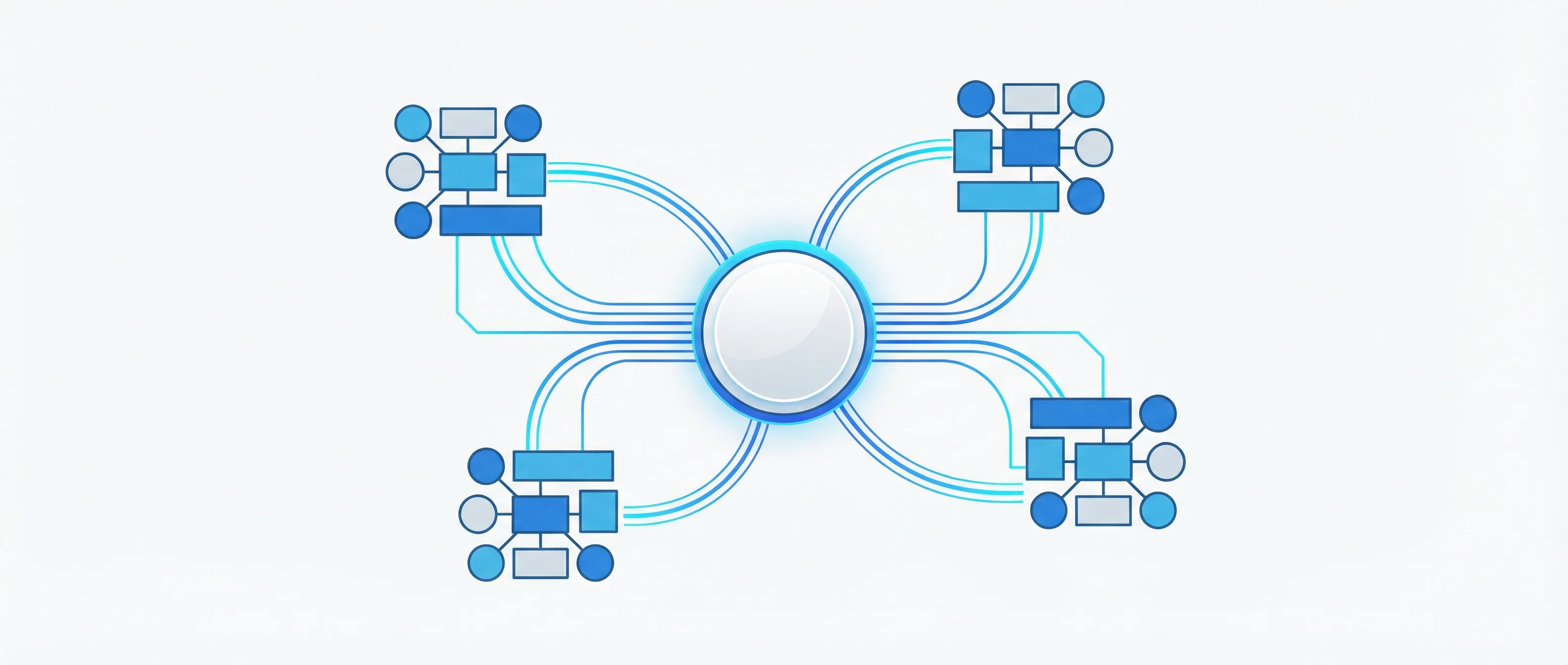
A well-thought-out content silo structure needs tight execution in five focused steps. It gives you a foundation that guides search engines and visitors straight through your website.
- Keyword research and clustering: Start with a thorough analysis of search terms. You group this data into logical content clusters to get a clear picture of the articles you need. This keyword research immediately shows which specific questions your audience is asking.
- Choosing the pillar pages: Assign exactly one central hub per main topic. This comprehensive guide covers the whole theme and forms the absolute core of your setup.
- Creating supporting content: Write focused articles for specific subtopics. This gives you enough depth without the category becoming unmanageably large.
- Implementing the internal linking strategy: Connect all related articles to each other. Make sure every cluster page links back to the central hub, which improves crawl efficiency straight away.
- Monitoring and adjusting: Keep analysing the performance of your URL hierarchy. Update published articles regularly so they stay current for the search engine.
The central hub is the anchor point of your topical authority. Without a strong pillar page of at least 2,500 words, your supporting articles lack a logical gathering point. Writing this all-round guide forces you to look at the subject from a wider perspective. During that process you quickly discover which specific details or complex subthemes stay unanswered on the main page. That missing information is the ideal basis for new cluster pages. It lets you identify and fill the content gaps within a silo systematically.
Quality and thematic coherence matter more than producing a fixed number of articles. An effective setup usually contains 10 to 25 pieces of content per topic. You split very broad and complex subjects into smaller units to keep the structure clear for your readers. The real power of this layout stands or falls with your internal linking structure. Search engines only truly understand the deeper context of your website when every supporting page consistently refers to its main page.
Want to know whether your current site structure is performing at its best? Request a Rankpilot SEO scan and find out right away where your opportunities for improvement are.
Content silo structure versus topic clusters
Marketers and SEO specialists often wrongly use the terms content silo structure and topic clusters as synonyms. Although both strategies are about grouping related information cleverly, they serve a genuinely different purpose. A content silo structure is the technical foundation of your website. It determines the exact URL hierarchy and dictates how search engines move through your domain. Topic clusters, on the other hand, belong to content marketing and focus purely on the editorial and semantic relationship between your articles.
Think of the silo as the hard, fixed folder structure of your website. This strict layout improves crawl efficiency straight away, because bots follow a clear path without getting lost in a web of disorganised pages. Within those hard boundaries you then apply the soft structure of topic clusters. You create focused content clusters around specific themes, with a comprehensive pillar page as the absolute centre. This thematic grouping proves to search engines that you really have every facet of a subject covered.
The biggest impact on your SEO authority comes from integrating both concepts carefully. A well-thought-out internal linking structure is the crucial connecting line here. Within a defined silo you consistently link all supporting articles to their main page. This stops the value you've built from leaking away to irrelevant sections of your domain. This combination makes sure search engines understand the contextual relevance straight away and reward it with better organic positions.
Executing this combined strategy calls for strict editorial discipline. You physically place each new piece of content in the right folder of your content silo structure. The result is a logical URL structure that mirrors the site structure perfectly. At the same time, you make sure the text fits the chosen topic cluster neatly. By sticking to this way of working, you build your topical authority deliberately and turn your website into a structured knowledge base.
Mistakes when setting up a content silo structure

A badly set up content silo structure wipes out the SEO authority you've built straight away. Many websites build an overly complex layout with overlapping categories that destroys any sense of overview. This dilutes your topical authority. Search engines get confused when the lines between different themes blur. For smaller websites a relatively flat structure often works much better than a deeply nested hierarchy. Keep your folders simple, logical and maintainable.
Ready for the next step?
Want to know what a content silo structure means for your situation in practice? RankPilot is happy to think along about the right approach, next steps and priorities.
See how we workAvoid these pitfalls while building your site structure:
- Too deep a URL hierarchy: Visitors and search engines should be able to reach important pillar pages within three clicks of the homepage at most. A folder structure that's too deep hides your best articles. Overlapping silos and too many subcategories make the relationships between pages unclear.
- Orphan pages: Orphan pages are published articles without any incoming internal links. Within a defined silo they're fatal for your crawl efficiency. Search engines simply don't find these pages and they add zero authority to your content clusters.
- Random cross-linking: Linking to completely different categories without any structure breaks through the closed walls of your silo. This leads to a watered-down focus, or diluted authority.
- Rigid folder structure: A layout that's too strict leaves no room for future content growth. You mustn't neglect your internal links or lock them into an inflexible system that breaks with new algorithm updates.
Cross-linking between different silos is allowed, but it needs a very well-thought-out strategy. Only link to another main category when it genuinely helps the reader further with a related problem. Do it too often without a clear purpose and your internal linking structure loses its steering power. The SEO value you've built then leaks out of your carefully designed cluster without you meaning it to. As a rule, make sure the vast majority of your links stay within the same thematic group. That guarantees link equity circulates as well as possible between all supporting articles and your central main page.
Frequently asked questions about content silo structure
Build a foundation with a content silo structure
A well-thought-out content silo structure is the absolute basis for lasting SEO success. It turns a random collection of articles into a structured, logical ecosystem. By grouping related topics tightly into content clusters around central pillar pages, you build focused topical authority. Search engines see straight away which fields your expertise covers. A controlled internal linking structure then makes sure the authority you build flows through to every page beneath. This increases relevance per topic and improves your website's crawl efficiency straight away.
The success of this approach stands or falls with a watertight strategic plan. Before you start writing or moving pages, map out the complete URL hierarchy. Decide in advance which main topics get their own section and how the supporting articles back each other up. Without that blueprint you risk internal competition between your own pages, or you accidentally create dead ends for search engines. Clear boundaries stop a cluster's focus getting diluted.
Once the foundation is in place, adding new articles becomes a lot easier. Rankpilot helps businesses scale clustered content without putting the structure they've built at risk. We make sure every new piece of text contributes directly to the overall authority of the cluster it belongs to.
Key takeaways
What to remember
The key points from this article, brought together in a more visual overview.
Explanation of the hierarchical structure
Improved crawl efficiency
Definition of hard silos (URL-based)
Contents
- What are topic clusters and content silos?
- What exactly is a content silo structure?
- Why Google loves a content silo structure
- Hard vs. soft content silo structure strategies
- Step-by-step plan for a strong content silo structure
- Content silo structure versus topic clusters
- Mistakes when setting up a content silo structure
- Frequently asked questions about content silo structure
- Build a foundation with a content silo structure
Want to know whether your current website is ready for further growth? Then request 5 free improvement points. We analyse your existing architecture, track down bottlenecks in the structure and deliver a concrete plan of action. Get in touch with Rankpilot and find out how we turn your domain into an undeniable authority in your market.